Image

Riding the High of a Writers Conference

I recently went to the 30th Annual Anwa Writers’ Conference this weekend, and though my body is exhausted, my mind is filled with ideas, fueled by motivation, and warmed with a slew of new friends in the publishing world.

It took me a several years to go to a writers’ conference. I thought for sure I could learn just as much through classes and books. This weekend I realized conferences are more than the new techniques we learn (though I found some invaluable). Conferences include growing friendships in the professional writing world, and being inspired to fulfill your potential.

Where else could I casually talk to a publishing manager about my book and the current trends in the market? Or learn from New York Times Best Selling authors about craft and get to chat over lunch with them?  With some of the bigger conferences you may not get this opportunity, but you need to find what conference fits your needs.

Now that I am back home and alone in front of my computer, I’m trying to decide what is the best way to keep riding this high and fulfilling my dream. Here are some tips I thought I’d share and feel free to add some of your own.

  1. Stay in Touch: When you make connections at the conference, keep them. Friend them on social media and keep that connection if it works for you. These writers, published or not, are serious about their careers. Support each other on your journey.
  2. Utilize the Connection: If you met an agent and plan on querying them next year, make sure to remind them where you met.  And with other authors, reach out to switch reviews or beta reads.
  3. Read those Notes: We all took notes over the weekend, but don’t let your conference notes get buried in that deep drawer we never venture too.
  4. “Success is in the doing”: Don’t let those negative thoughts most writers have, get to you. We can’t wait for happiness when we get our first book deal, or make a certain list, or win a certain award. Live in the journey. Live in the writing.

 

Feed Your Muse

I love to write. I don’t know why anyone would pick this profession for any other reason. A month ago though, the dark monsters of the swamp came out to haunt me. You know the ones with those killer claws: stress, anxiety, and insecurity.  And with writing content articles and editing my current novel, writing had morphed into some twisted self-deprecating job.

I needed a break. I needed to close my computer for a few days and feed my muse.

It was difficult at first to shut down the nagging voices telling me to be productive. But I closed my laptop, packed my bags, and escape to the country.

I went for walks. Got caught in the rain. Read for enjoyment. Mother Nature calmed my soul and left my imagination free to play.

Not everyone is not able to run away, but we still need to make time for ourselves and, as ted talksElizabeth Gilbert referred to it, Our Elusive Creative Genius.  In this TED talks, she explains that when we see our muse, or creative genius, as something outside of us, then it is easier to maintain our sanity.  It is worth the time to watch.

I enjoy thinking of my muse as a separate identity or creative genius. One we must feed and nurture in the hope that it’s won’t torment us.

How do you feed your muse?

The Brothers Grimm


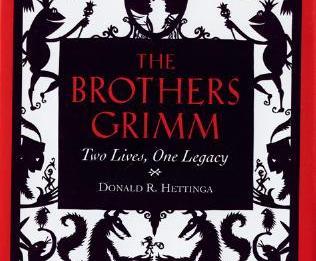
Every now and again, I like to dip into history and non-fiction. I find the change of pace welcoming and what I learn always intriguing. My most recent read was The Brothers Grimm: Two Lives, One Legacy by Donald R. Hettinga.

Jacob and Wilhem Grimm are most popular for combing the German countryside for fables and legends and publishing them. Disney has made a mint on several of their stories such as Snow White or Sleeping Beauty. But the story behind their lives was a true and interesting tale woven with kings, queens, and even revolution. The brothers Grimm preserved these ancient tales and also the German language with their books on linguistics.

My favorite part was when a critic of their first published book of stories complained that they were too graphic and disturbing for children. Jacob (the elder brother) responded that grew him up with his mother telling him the tale of How Some Children Played at Slaughtering, to show him the dangers of playing, and it worked for him. The story is about children who pretended to play slaughtering pigs and ended up killing their playmates. Fantastically morbid, I know, but part of me is still intrigued enough to read it. Wilhem Grimm’s take in response to the critics was also noteworthy: “You can fool yourself into thinking that what can be removed from a book can also be removed from real life.”

The Grimm brothers survived many political regimes and Napoleon’s conquests that sent soldiers into the streets outside their house. They dealt with poverty and death. By the end of their lives, their work and contributions were celebrated and revered. They spent their last days together, as a family.

I’ll leave you with one of my favorite quotes from the book: “In a grain of sand we may see the sense and significance of large globes of which our world is one of the smallest.” Jacob Grimm

Old School Dystopia

I love how dystopia has taken off lately. I devoured Hunger Games with everyone else and recently watched the fourth movie in the theaters. Suzanne Collins told of pain, love, and war masterfully, and of Katniss’s antagonist, the government.

I recently went back to some of the old school dystopian stories that I loved. And reading them a second time, helped me appreciate not only the story but the artistry involved in every word. I couldn’t help but mark up Fahrenheit 451 and pause in awe several times. 1984 left me with the haunting images that I’ll never forget. Another one off the beaten path I found was The Gate to Women’s Country by Sheri S. Tepper. There were secrets unseen that left my mind reeling for days.

Enjoying the revival of this genre makes me appreciate the classics all the more. I’ll leave you with one of my favorite quotes from Ray Bradbury.

“Stuff your eyes with wonder… live as if you’d drop dead in 10 seconds. See the world. It’s more fantastic than any dream made or paid for in factories. Ask no guarantees, ask for no security, there were never such an animal.”

What Doesn’t Kill You May Make You a Writer

Lately, I have run into many personal memoirs. One recently that hit the news is by writer Allen Kurzweil. He has written fiction for years and is releasing a memoir about his experiences in boarding school with a bully. It was the ultimate therapy session he reported as he confronted his bully who was now in prison for fraud.killed you off

It reminds me of how personal writing can be, even in fiction. Writers often joke that if we don’t like you we will make you a character and kill you off. There is some truth in that. Writers pour their selves into every novel, and that includes our experiences. Good or bad our life molds the stories we tell.

I think a great writer can take those experiences and transfer the emotion into every page of their work. During revision, checking for emotion is near the top of my checklist.

Here is a classic example of the power of emotion from the book, Of Mice and Men:

“There is a path through the willows and among the sycamores, a path beaten hard by boys coming down from the ranches to swim in the deep pool, and beaten hard by tramps who come wearily down from the highway in the evening to jungle-up near water.”

The setting is painted with emotion and characters in such a way that strikes us much harder than the color of leaves, or dry grass.

I hope we can all channel those moments that have touched us the most, and turn them into something beautiful. For quoting Steinbeck again, “There’s more beauty in truth, even if it is dreadful beauty.” (From one of my favorites, East of Eden.)

If anyone needs to be inspired by some memoirs, here are some that I enjoyed.

*Half a Life: A Memoir by Darin Strauss

* Left to Tell by Immaculée Ilibagiza

*The Glass Castle: A Memoir by Jeannette Walls

I’ll Dot My “i”s, but I Want to Murder those Commas

I was never an English major, and my college years are hazy at best. But, wanting to be an author forced my hand at learning grammar. So venturing out of the fiction section, I found several grammar books.

I thought I would share some of my favorites below:

  • The Chicago Manual of Style

For the purely technical side of grammar, one of the books I recommend is The Chicago Manual. It is the bible of grammar, and it reads that way as well, slow and difficult. It has all the answers to my questions though, even if it takes me awhile to find them. They also offer on online edition which is relatively inexpensive and makes searching easier.

  • Writing Tools: 50 Essential Strategies for Every Writer by Roy Peter Clark

This book breaks down the rules of grammar into easy, applicable tools to improve your writing. He has written several books that I enjoy, which says a lot given the subject manner.

  • The Elements of Style by William Strunk Jr.

It’s a small book with a powerful punch. I’d recommend every aspiring writer to buy it and read it, more than once. It’s a simple book with basic truths about writing.

Grammar isn’t a one-time thing. Heck, I had to look up one-time versus onetime while writing this. I am constantly plucking away at my grammar books, reading a page here, searching for an answer there.  So if you find yourself stuck on where that comma goes for the twentieth time, venture out of the fiction section to find help.

What grammar books do you find useful?